




The University of Dhaka (DU for short) is an autonomous university of Bangladesh. It is the country's highest seat of learning, and so this University of Dhaka is the address of many students' dreams. The university began its journey in British India in 1921. Because its standards were rigorously controlled at the outset by many world-famous scientists, it earned recognition at the time as the Oxford of the East. One distinctive thing about the University of Dhaka is that it made a great contribution to the independence of Bangladesh — something unique in world history.
Location and introduction of the University of Dhaka
The University of Dhaka is located in the Shahbagh area of Dhaka. On 1 July 1921 the university's doors were opened to students. The University of Dhaka grew up over about 600 acres in Ramna, the most elegant and beautiful area of Dhaka. It began its journey with three faculties and twelve departments, starting with 877 students. Progress was somewhat disrupted by the Second World War and the partition of India. At that time the hopes and aspirations of the people of this country were kindled around the University of Dhaka — the only university in the province of Dhaka, capital of East Pakistan. The work of the University of Dhaka began again with fresh energy. At present the university has 13 faculties, 84 departments, 12 institutes and 56 research centres. It is the university with the most faculties and the most seats in Bangladesh.

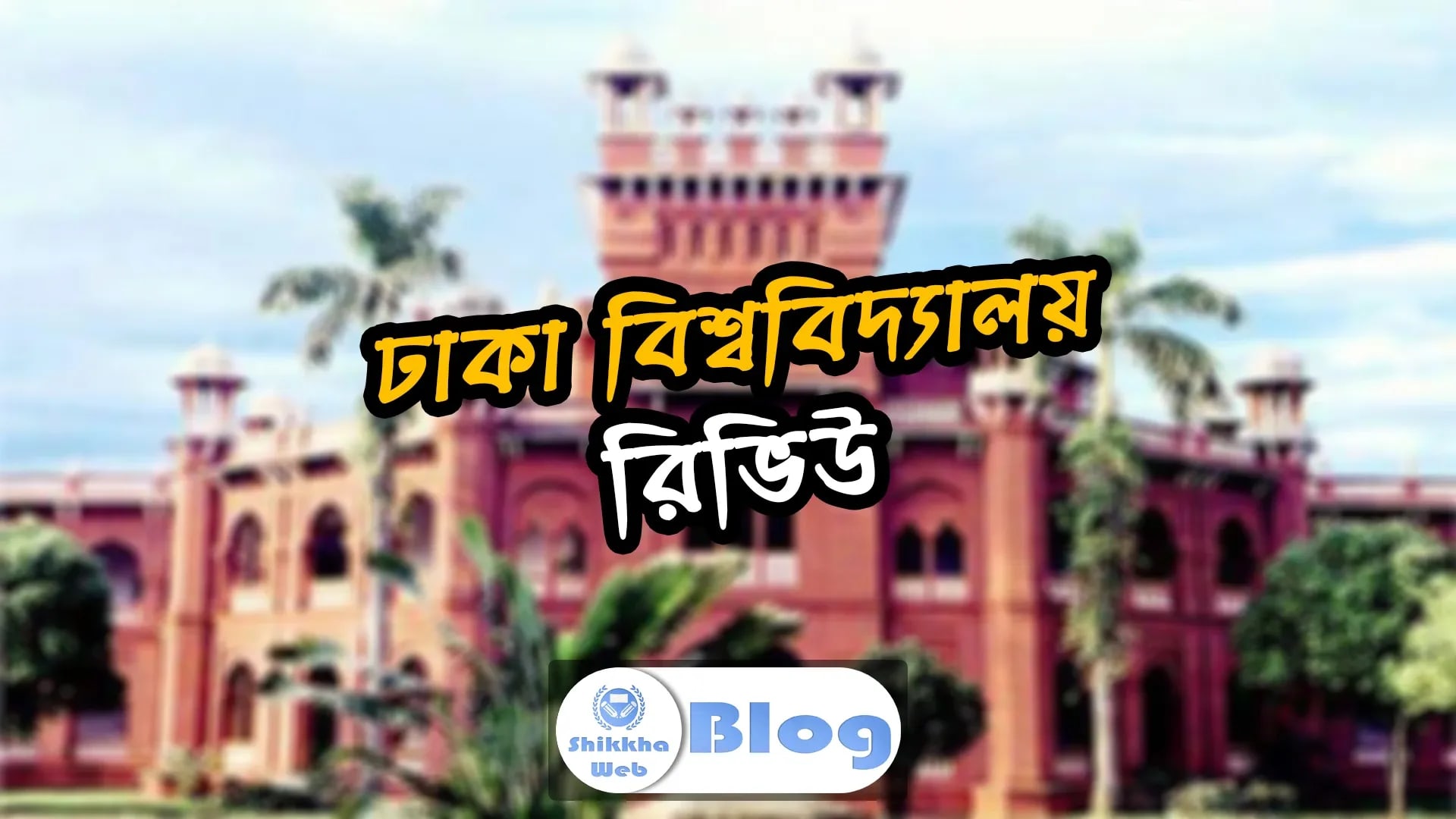
Curzon Hall
Why study at the University of Dhaka?
From the very beginning the University of Dhaka has been much wished for by the people of this country. Where a state usually establishes a university, here the University of Dhaka created the state of Bangladesh. From the Language Movement of 1952 through the Liberation War of 1971 and up to today, the students of this university have gone on protesting against every injustice. Many famous people and famous politicians studied at this university, and those people remain models for us even now. Bangabandhu Sheikh Mujibur Rahman, the architect of Bangladesh and its first president. Syed Nazrul Islam, Bangladesh's first acting president. Tajuddin Ahmad, Bangladesh's first prime minister. M A Wazed Miah, Bangladesh's distinguished nuclear scientist. Dr Muhammad Yunus, Bangladesh's distinguished economist, founder of Grameen Bank and winner of the Nobel Peace Prize in 2006. Humayun Ahmed, the novelist. Dr Muhammed Zafar Iqbal, the physicist. Many more like them were students of this university and have become very famous people through their work. Among the famous teachers are Satyendra Nath Bose, the world-famous physicist; Dr M Shamsher Ali, the nuclear scientist; Dr Muhammad Shahidullah, the scholar of culture and the Bengali language; and Dr Munier Chowdhury, the martyred intellectual. Many such great figures have taught at this university. To every student of the University of Dhaka they are models.

Sociology Terrace
The University of Dhaka's faculties and departments
1. Faculty of Science, University of Dhaka
- Physics
- Mathematics
- Chemistry
- Statistics and Data Science
- Applied Mathematics
- Theoretical Physics
- Biomedical Physics and Technology
2. Faculty of Biological Sciences, University of Dhaka
- Soil, Water and Environment
- Botany
- Zoology
- Biochemistry and Molecular Biology
- Psychology
- Microbiology
- Fisheries
- Genetic Engineering and Biotechnology
- Clinical Psychology
- Educational and Counselling Psychology
3. Faculty of Pharmacy, University of Dhaka
- Pharmacy
- Clinical Pharmacy and Pharmacology
- Pharmaceutical Technology
4. Faculty of Earth and Environmental Sciences, University of Dhaka
- Geography and Environment
- Geology
- Oceanography
- Disaster Science and Management
5. Faculty of Engineering and Technology, University of Dhaka
- Electrical and Electronic Engineering
- Applied Chemistry and Chemical Engineering
- Computer Science and Engineering
- Nuclear Engineering
- Robotics and Mechatronics Engineering

Swimming Pool
6. Faculty of Arts, University of Dhaka
- Bengali
- English
- Arabic
- Persian Language and Literature
- Urdu
- Sanskrit
- Pali and Buddhist Studies and Culture
- History
- Philosophy
- Islamic History and Culture
- Islamic Studies
- Information Science and Library Management
- Linguistics * Theatre and Music
- World Religions and Culture
- Linguistics
7. Faculty of Social Sciences, University of Dhaka
- Economics
- Political Science
- Anthropology
- Mass Communication and Journalism
- Sociology
- Public Administration
- International Relations
- Peace and Conflict Studies
- Women and Gender Studies
- Development Studies
- Population Sciences
- Television, Film and Photography
- Criminology
- Communication Disorders
8. Faculty of Law, University of Dhaka
- Law

FBS Cafeteria
9. Faculty of Business Studies, University of Dhaka
- Management and Information Systems
- Accounting and Information Systems
- Marketing
- Finance
- Banking and Insurance
- International Business
- Tourism and Hospitality Management
- Organisation Strategy and Leadership
10. Faculty of Fine Art, University of Dhaka
- Drawing and Painting
- Graphic Design
- Printmaking
- Oriental Art
- Sculpture
- Crafts
- Ceramics
- History of Art
11. Faculty of Medicine, University of Dhaka
12. Faculty of Postgraduate Medical Sciences, University of Dhaka
13. Faculty of Education, University of Dhaka
The University of Dhaka's institutes and departments

Institute of Information Technology
1. Institute of Information Technology, University of Dhaka
- Software Engineering
2. Institute of Statistical Research and Training, University of Dhaka
- Applied Statistics
3. Institute of Nutrition and Food Science, University of Dhaka
- Nutrition and Food Science
4. Institute of Leather Engineering and Technology, University of Dhaka
- Leather Engineering
- Footwear Engineering
- Leather Products Engineering
5. Institute of Modern Languages, University of Dhaka
- English for Speakers of Other Languages (ESOL)
- French Language and Culture (FLC)
- Chinese Language and Culture (CLC)
- Japanese Language and Culture (JLC)
6. Institute of Education and Research, University of Dhaka
- Education
7. Institute of Social Welfare and Research, University of Dhaka
- Social Welfare
8. Institute of Health Economics, University of Dhaka
- Health Economics
9. Institute of Disaster Management and Vulnerability Studies, University of Dhaka
- Disaster Management
10. Institute of Business Administration, University of Dhaka
11. Institute of Energy, University of Dhaka
12. Confucius Institute, University of Dhaka

Institute of Business Administration
The University of Dhaka's lab facilities and research centres
The University of Dhaka has high-quality laboratories. Teaching is carried out here with the necessary research instruments and technology. There are also 52 research centres and bureaus, more than at any other university in Bangladesh. These are playing a large part in advancing the country's research work.

Shahidullah Hall Pond
The University of Dhaka's residential halls
The University of Dhaka has 19 halls and 5 hostels for students to live in. Every hall has its own reading room, a dining room, indoor games and wifi.
The halls of the University of Dhaka
- 1. Salimullah Muslim Hall
- 2. Dr Muhammad Shahidullah Hall
- 3. Jagannath Hall
- 4. Fazlul Huq Muslim Hall
- 5. Shaheed Sergeant Zahurul Haq Hall
- 6. Rokeya Hall
- 7. Masterda Surya Sen Hall
- 8. Haji Muhammad Mohsin Hall
- 9. Shamsun Nahar Hall
- 10. Kabi Jasimuddin Hall
- 11. Sir A F Rahman Hall
- 12. Bangabandhu Sheikh Mujibur Rahman Hall
- 13. Muktijoddha Ziaur Rahman Hall
- 14. Bangladesh-Kuwait Maitree Hall
- 15. Amar Ekushey Hall
- 16. Sir Philip Hartog International Hall
- 17. Begum Fazilatunnesa Mujib Hall
- 18. Bijoy Ekattor Hall
- 19. Kabi Sufia Kamal Hall
The hostels of the University of Dhaka
- 1. Shaheed Athlete Sultana Kamal Hostel
- 2. IBA Hostel
- 3. Shahnewaz Chhatrabas
- 4. Dr Kudrat-e-Khuda Hostel
- 5. Nawab Faizunnesa Chowdhurani Women's Residence

Sufia Kamal Hall
The University of Dhaka's other facilities
Student–teacher relations at the University of Dhaka
There are very good relations between the students and teachers of the University of Dhaka. The teachers here behave in a very friendly way, and the seniors are very helpful too.

Central Library
The library of the University of Dhaka
The central library of the University of Dhaka holds more than six hundred and eighty thousand books. Alongside books there are daily newspapers, magazines and other journals. There are also separate libraries for each faculty and institute, among which the e-library of the Faculty of Business Studies is notable.

Transport
The transport of the University of Dhaka
There are 34 buses for non-residential students, running on various routes 5 days a week.

Teacher-Student Centre
The teacher-student centre of the University of Dhaka
The teacher-student centre, or TSC, of the University of Dhaka is a four-storey building. Various organisations of the university are active here.
The cafeteria of the University of Dhaka
Food is available at affordable prices in the university's central cafeteria, which is located beside the TSC. There are also many more canteens in the various faculties.

Auditorium
The auditorium of the University of Dhaka
The university has a large auditorium, located beside the TSC.

Nawab Ali Senate Bhaban
The senate building of the University of Dhaka
Because the University of Dhaka is an autonomous institution, it has a senate building for setting policy, named the Nawab Ali Senate Building. Because it looks rather like the National Parliament building, it is also called the ‘mini parliament building'.
Sport and recreation at the University of Dhaka
The University of Dhaka has a central field for sport. Every hall also has its own field for games. For recreation there are many cultural societies.
The standard of education at the University of Dhaka
The teachers of the University of Dhaka win the largest number of Bangladesh Academy of Sciences awards. In an Asia ranking it has secured a place among the top 100 universities, and the University of Dhaka now stands 64th.
The University of Dhaka's campus life
Campus life at the University of Dhaka is, in a word, remarkable. With study, sport and cultural events, a perfect campus life can be enjoyed here. That a university is not only a place of study, but that sport and culture are needed alongside it, can be felt keenly on the University of Dhaka campus. Seniors come forward with any study problem, and the teachers help a great deal too, explaining lessons with real sincerity. Amid green nature a good environment for study is created. When it comes to festivals the students of the University of Dhaka are far ahead: the Pohela Boishakh festival, the spring festival, the Ashar festival, the Ekushey February festival and many more are observed. In these festivals, besides university students, students of other institutions and people of every class and profession take part. The country's National Shaheed Minar is located at this university. On Pohela Boishakh the students of the Faculty of Fine Art, together with students of other departments, arrange the country's largest Mangal Shobhajatra. Beyond this the university arranges an annual excursion, concerts at various times, inter-departmental competitions, inter-hall competitions and many sports. The University of Dhaka authorities also arrange debating competitions and many events. Every hall has a debating club. That is why campus life here is so much fun.
The University of Dhaka's societies and clubs
Among the notable cultural organisations are:
Propod, Dhaka University Film Society, Charan Cultural Centre, Bangladesh Udichi Shilpigosthi, Dhaka University Photographic Society, Dhaka University Debating Society, Dhaka University Tourist Society, Dhaka University IT Society (DUITS), Dhaka University Science Society (DUSS), Dhaka University Bandhusabha, Bigyan Andolon Moncho, Bangladesh Open Science Organization, Badhan, Sangskritik Union and others.

Shaheed Minar
The University of Dhaka's memorials and sculptures
1. Aparajeyo Bangla
Built in memory of the war of independence, by the freedom-fighter sculptor Syed Abdullah Khalid. The sculpture — 12 feet high, 8 feet wide and 6 feet in diameter — was unveiled on 16 December 1979.
2. Anti-Terrorism Raju Memorial Sculpture
The sculpture was installed at the TSC on 17 September 1997. The artist Shyamal Chowdhury made it.
3. Shaheed Minar
A memorial built in memory of the martyrs of the 1952 state language movement. The 14-metre-tall column was made by the sculptor Hamidur Rahman. On 21 February 1963 the Shaheed Minar was unveiled by Hasina Begum, mother of the language movement martyr Abul Barkat. The present Shaheed Minar was rebuilt in 1972.
4. Doyel Chattar
5. Tin Netar Mazar
6. Dhaka Gate
7. Swadhinata Sangram
8. Ghrinastambha
9. Swopnarjito Swadhinata
10. The sculpture of Madhu-da
11. Sapta Shaheed Memorial
12. Shaheed Dr Milon Sculpture
13. Swami Vivekananda Sculpture
14. Buddhist Sculpture
15. Dove of Peace Sculpture
16. Mukti O Ganatantra Toran
These have increased the beauty of the University of Dhaka still further.

Raju Sculpture
The University of Dhaka's admission process and preparation
From this year — the 2019–20 academic year — the questions will change a good deal from the way they were set in past years. From now the paper will carry 100 marks in total, of which 60 marks will be multiple-choice questions and 40 marks written. The subjects of the test will stay as before: each unit will have questions on the subjects of its own group. Only the mark distribution will change. To get a good position in the DU test you have to study every subject very well, because DU's questions are set from a somewhat basic level. You have to try to do a multiple-choice paper in very little time, and for the written questions you have to practise small pieces of maths. There is very little time in the admission test, so to stay ahead in the admission battle you must practise solving problems quickly. At home you can test your preparation by sitting past years' papers. Keep trying to do those papers well, and assess yourself thoroughly — that will build your confidence. You must have good command of the books. Then, it can be hoped, you will succeed, insha'Allah.

Mukti O Gonotontro Toron
Final words
If your dream is this 600-acre University of Dhaka, then start moving towards it now without delay. I will be waiting for the campus to come alive with your arrival. May your effort succeed.
Md Sajib Hossain
Department of Psychology (54th batch, 2018–19)
University of Dhaka